Feeds:
Posts
Comments

Nothing Left To Lose

In the fall of 1990, I had a vision – I wanted to write novels of hope. I had taken a 19th Century American literature course, and the teacher had said, “in 19th century American novels, you expected a happy outcome.  In 20th century novels, you typically expect a negative or unhappy outcome.”  I didn’t like that trend, and wanted to do something different.

The movie Dances With Wolves had just come out, and it really sparked something in me.  I realized that I wanted to explore a time in my Dad’s life I knew little about.

In 1967, when I was 17, we were living in Oklahoma City when my Dad’s drinking hit bottom. My aunt and uncle came and picked up my Mom, my 3 sisters and myself, taking us back to Fort Worth to live with my maternal grandmother. Dad disappeared for a while, then later returned to Fort Worth, somehow changed.  He sobered up and got into recovery, and reclaimed the world he had lost.  I never knew what had happened to him during the time he was gone, other than a vague comment my Mom made about him going and working on the wheat harvest, which he had done in high school.  I never thought I would see him again, and later wondered what his life had been like during the time while he was gone.

He died before it ever occurred to me to ask him about it.  I began working on how to tell that story, and after I wrote the first two chapters, I suddenly realized – if I explored this thread fully, I had – a novel of hope!  It was a tremendously empowering moment.

In the spring of 1991, I quit my job, went up to Oklahoma and worked on the wheat harvest, to try and imagine what my Dad’s life was like after we left, and what might have happened to him.  How I got there is a story of its own: Dances With Wolves Filmsite.

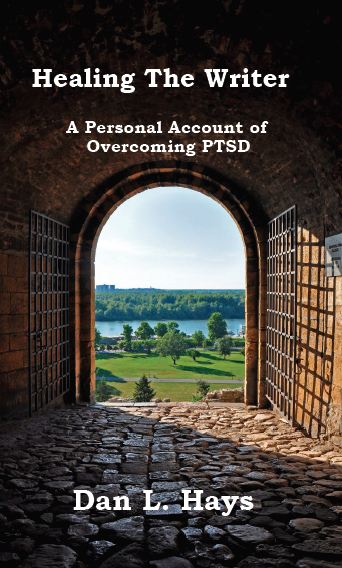
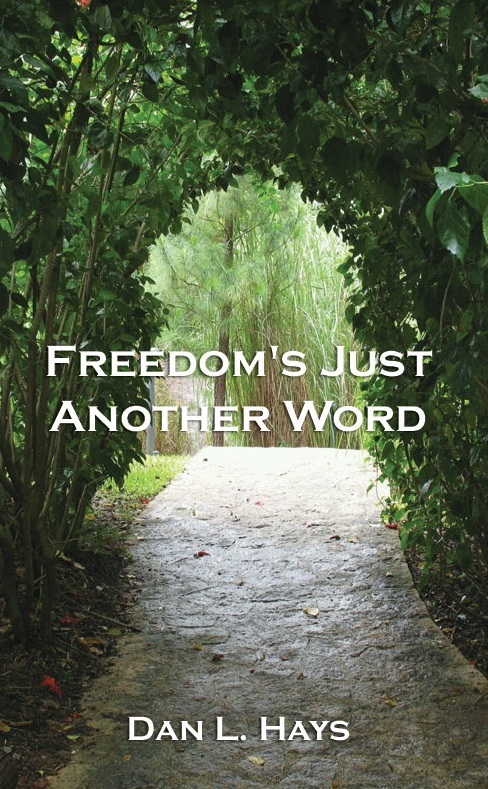
The book I wrote in 1993 was my best guess as to what happened.  It was entitled Nothing Left To Lose.  It was a novel,  written from a very loving and generative perspective.  But how did I get to that loving place in describing a man who had been violent toward me when I was a teenager?  I later realized that I needed to flesh out the back story.  I will do so in several books, beginning with my first published memoir, Freedom’s Just Another Word, about the time around his death and my healing process.  The reason I never published this novel will be the topic of the second book I will publish – Healing The Writer; writing that book freed my creativity!

I now plan to publish Nothing Left To Lose, the novel about my Dad written from a loving and healed perspective.

The novel begins like this:

Chapter 1
Eyes downcast, he trudged along, conscious of the uneven surface along the shoulder of the highway, stumbling occasionally on chunks of gravel or small pebbles. He looked up periodically at the cars speeding past, as if to keep his bearings. His face was lined and weary and his entire body ached. He was wearing a worn brown corduroy jacket, a wrinkled plaid flannel shirt, dark blue polyester pants, white socks and cordovan loafers.

It was about 5 pm and the sun had just set. Night was approaching rapidly and the chill of February in 1967 was harshened by a brisk wind which picked up in gusts as he walked. He tried to walk faster, his hands deep in his pockets, but had to step carefully so not to turn an ankle on the uneven surface beside the roadbed. His vision was limited by the flash of oncoming headlights.

He had been told there was a boarding house in town where he could get a room for the night, and he plodded on, the directions vaguely held in a corner of his consciousness.

“We’re sorry,” they’d said at the detox center, “but all we can do is provide you a place for 5 days. We just help people dry out. Then we have to give the bed to someone else.” They had directed him to the boarding house, wished him well, given him back his clothes and money, and sent him on his way.

His feet hurt, his whole body ached, he craved a drink but knew that he must make the most of this chance. There was another pain, too, an emotional void when he thought of all he had left behind, all he had lost. He wondered where they were now, but he knew he could do nothing for them. Yet he longed for their voices, for any source of warmth and comfort to relieve this coldness, and the blackness in his soul.
——————————–

Sitting and looking out the big picture window at the front of Miss White’s Boarding House, Peter Sanders watched the occasional car pass, and a few blocks away he could see the busier traffic on the main street. Busy, he thought, for our town. Cornell, Oklahoma wasn’t exactly New York, he chuckled to himself, but it was rush hour here, with cars heading home to supper.

At the corner of the main road where it intersected his street, he saw a figure hesitate, look at street signs, and uncertainly begin to walk toward him. Another drunk out of the center, he thought to himself, betting that the man was headed here. This was where they mostly came when they had nowhere else to go.

Peter got up, stepped to the door of the kitchen, cracked it open. “Miss Vera,” he called.

“Yes, Peter?” she replied.

“I think we got a visitor coming in.”

“Alright. Send him through to me.” Miss Vera stepped wearily into the living room. She had seen so many come through her doors that the novelty of it had long since worn off.

Peter sat in one of the overstuffed chairs in the living room, extending his feet toward the large space heater in the corner. Miss Vera went back into the kitchen. The man opened the door.

Ben Hays, my Dad, in 1971.

“Step in and warm up, stranger,” Peter called. He stepped quickly and gratefully over in front of the space heater, holding his hands out over it, shivering slightly. Peter studied him. He was about six feet tall, slender yet sturdy, with dark circles under the eyes, sunken cheeks. He had dark brown hair, cut short, rumpled and uncombed, and his clothes weren’t heavy enough for February. The clothes looked of good quality, but were tired from overuse. His hands looked soft. There were no calluses or marks, so he was probably not a laborer. His shoulders slumped wearily, hands twitched, and he had an almost nauseous look on his face. Peter imagined him to be a businessman gone to seed – gone down far and fast, too. Peter knew the look – he’d had it himself recently enough.

Publishing Short Works

In 1984 as I read The Bridge Across Forever by Richard Bach, I was astonished by one passage. The author recounted how he took a creative writing class in high school; the teacher declared he would only award a grade of A if a student published a piece they had written during the semester.  Bach was elated when he presented the teacher a copy of the Sunday supplement to the newspaper which included an article he had written.

I’ve carried that concept in mind for years, and it seems to be a valid benchmark.  The acid test for a writer is publication – if I have writing talent, it is to be shared.  There is a declarative quality about having your writing appear in print.  However, for a long work such as a novel or memoir, there is a much longer process involved in reaching publication.  But shorter pieces can be published much more quickly, there are significant advantages to doing so – and several ways to get there.

Blogs have become a common form of publication, and allow the writer to put a piece in the public eye easily.  There is a limitation – with so many blogs out there competing for public attention, and admittedly some of them of varying quality, just how much readership a blog receives is very uneven.  But – it’s a way to start, no doubt.  And I’ve heard recently that publishers are looking more toward blogs as a necessity for a writer, so having a blog carries that advantage as well.  But with no editorial oversight unless the author chooses to seek it, there isn’t input to help craft the work. Another blog outlet is to write guest posts, as I did with “Why Is This Story Best Told As A Memoir?”  But once again, the host just posted the entry without editorial oversight.

I have also used with several outlets like Authors Den and Self Growth.com, which allow authors to publish their works.  While it does give a smidge greater credibility, I just re-published pieces from my blog, as did the other authors.  I’ve heard these sites called content aggregators – they gather information without much effort to evaluate it.

Then last summer I had a writer friend from Twitter ask if I would read a series of posts she was writing for an online magazine.  She was exploring her next book, and wanted to see if the story was evolving in the right direction.  I began reading her articles, which were very well written.  Then I started looking more closely at the magazine, which was high quality and very professionally designed.  My friend was very complimentary of the magazine and the staff and suggested I might write for them as well.

I contacted the magazine and realized something was different when the editor said she would have the President send me the contract for review.  Contract? I thought I was just going to post some blog articles.

The contract stated that the magazine wanted original content, and would have exclusive rights to the material for 90 days from publication. I asked about using pieces from my blog.  The editor said that would be alright occasionally, but they really wanted original content.  Suddenly the dots connected, and I realized I had wonderful new content to explore: I could publish chapters of my next memoir as individual articles, which would help me clarify the direction of a sprawling and difficult topic.

I started to write for the magazine, and it has been a wonderful experience.  I got depth perception for my next book and received editorial feedback which has proved invaluable. I also got reader feedback beginning with the very first article, entitled “Why Is This Fantastic News So Scary?”  I didn’t have to wait until the book was published to see how early parts would affect readers.

I’m not advocating trying to earn a living by publishing short works.  I heard a writer comment about making a living as a freelance writer: “If you’re going to do that, you might want to have a spouse with a regular income.”  As I have investigated freelance, it sure seems like that’s a valid comment.  But the legitimacy and  credibility of having works in print is well served by seeking some type of publication of short works – either in a blog, author publication sites, or with an online magazine.  As long as you don’t try to pay the mortgage that way, it can be a rewarding experience.

Originally published in Write By Night.

On the first day of my creative writing class, the teacher opened the discussion by asking “What is a story?”  She suggested that we begin by defining the word.  Several people responded.  I took a minute to think about the meaning, and then raised my hand and said “A story is something that happens to someone.”  The teacher smiled broadly, nodded, and said “That’s it exactly – at the very basic level, the essence of a story is action.”

So what was the best way to tell a particular story, to describe that action?  Over the next several years I read a lot about point of view – mostly looking at first person and third person, and what were the advantages and limitations of each.  First person is confined to the thoughts of the narrator.  Third person can either be omniscient – using the thoughts of all of the characters, or limited – using the thoughts of one character’s mind. After I experimented with point of view, it became apparent that it depended on the story.

Years later I wrote about a time my Dad’s life when he disappeared for a year, worked the wheat harvest, had a spiritual experience in the process.  He returned a changed man.  After his death I realized I’d never asked him what happened.  I started with the part I knew, leading into what might have taken place later.  I decided to make it a novel, and chose the third person omniscient viewpoint.  I wrote in a more detached style, which allowed me the distance to step back and imagine the events objectively.  I could speak from the perspective of various characters as needed.

When the story was about me, “something that happens to someone” still held true.  Something had happened that I wanted to share, and decided to write about it in depth.  Not an original concept.  Many people have written a memoir for that very reason.  The first person viewpoint had an immediacy that helped me capture the emotions and experience of the moment.  I wrote about the events surrounding the time of my father’s death 17 years ago.

I knew what happened, and had journalled extensively about it at the time.  There was plenty of fodder to refresh my memory of the events.  As I wrote I fell into the mode of  “I did this, that happened, I felt this about it, I experienced, and then next I …”  I was in the middle of the events, with no psychic distance.  To tell that particular story, I needed to be that close.  Yet as I wrote, I could feel the events at a physical level.  My heart raced as I felt unsafe when that strange person entered the room.  I smelled the coffee I drank in a restaurant as I chronicled my feelings in a notebook. I felt the heat of Houston on a muggy afternoon in October; heard leaves blowing in the breeze that only stirred up the heat without relief.

Even more happened.  I had never written down everything that took place the week my Dad died.  I heard the jangle as the phone rang; heard my sister say “better come home, Dad is dying.”  I sat in a darkened airplane and wrote brief notes in a small notebook “it’s too soon, I’m not ready for this.”  I walked up to a hospital at night in Tulsa, wondering if it was just my imagination because of the lights, or was this huge building really pink?” (I saw it the next day, and sure enough – it was pink.)

I looked down at my father lying in a hospital bed with a tube down his throat, barely heard the nurse saying he was already functionally gone, and the machines were keeping him alive.  I returned to the room after the machines had been turned off, and his breathing had stopped.  I stroked my father’s forehead, something I never would have dared if he were alive.  I walked into to the “Grief Room” at the hospital, where no one was attending to the needs of my family, sitting and crying all alone.  I pushed down my feelings because someone had to make funeral arrangements, and the task fell on me.

Later in the week, I visited his office at the hospital, heard his boss describe how he had spent his last several years helping others.  I drove just outside Tulsa and walked across his 5 acre pecan orchard, then used his chain saw to cut down a couple of dead trees, a project he and I had shared.  I sat at the dinner table at my parent’s house and went through my parent’s financial papers to reassure my Mom.  I stepped out in front of a packed church to deliver his eulogy.

Of course it was cathartic to write down those experiences – isn’t that one of the biggest benefits of memoir?  I felt the events, experienced them in a deeper way than before, and could release some of the emotional charge they contained.

As the memoir continued I wrote about the events after my Dad died.  I met with a minister to discuss an reservoir of old anger I had discovered – anger at my Dad, anger at God.  I dreamed a man was chasing me with a gun.  I did an inner child exercise, and remembered a violent incident with my Dad when I was a teenager.  Then came some intense healing work.

I did an exercise to cut cords to the feelings I was carrying from generations of my family – an ancestral burden that had weighed me down greatly.  Many nights I released terror from the violent incident.  I relived the violent incident on a feeling level several times.   I wrote down ways I had changed, and burned the papers, to let go of who I used to be.  I dreamed that there was a tiger living in my house.  I knew it was my rage, and had to be dealt with.  I made a commitment to release that rage in safe ways.  There were a number of other healing experiences, and by the end of the memoir, it all led to a new sense of forgiveness for my father.  I wrote down my tremendous gratitude for the whole experience.

Then something happened which I hadn’t envisioned.  After I published the memoir, which I called Freedom’s Just Another Word, I had numerous people say they benefitted greatly from my experience, from reading about my journey and the steps I had taken to heal.  I was genuinely surprised.  I hadn’t seen that coming, but was delighted that it happened.  That was not the reason for the memoir – it just was something I needed to do.  For me it was an enormously healing process.   But if writing a memoir could yield additional rewards like that – helping other people heal and grow – then it was a huge success.

 Originally Published in Laura Schultz Now

Photo Credits:

“Good Question” e-magic @Flickr.com. Creative Commons. Some Rights Reserved.

leaves in the wind: jans canon @flickr.com.  Creative Commons.  Some rights reserved.

Testing My Writing Ability

What if I don’t have a talent for creative writing?

On the other hand – what if I do?

______

It was September of 1988, and I had signed up for a creative writing class at The University of Houston.  The teacher was a well known published author and writing teacher from New York City who had agreed to guest lecture for a year.  It seemed like a great opportunity and I wanted to learn more about my craft, so I sat nervously in class with 30 other students.  Oh, did I mention that I was 38 years old at the time?  It felt a bit awkward that I was so much older than most of the students, but I was willing to accept that discomfort to get some depth perception on my writing ability.

In the first class the teacher described our writing process.  We would each turn in a 1,000 word piece every two weeks.  The teacher would select a few of our writings, then the class and teacher would review and critique our work.  Gulp!  I had been journalling extensively, had written some short works and won praise for them, but this was unveiling my talent at a whole new level.

The class was an hour and a half long. The teacher lectured for the first part of class, then read one of our works, and the class would spend 10 to 15 minutes reviewing it.  We reviewed 3 to 4 pieces per class, and the group was very generative in their comments – honest but gentle. The teacher was a bit more incisive – she got to the heart of the matter candidly and sometimes a bit harshly.

My first piece was not read aloud in class.  I worked hard on a second piece entitled “The Hunt,” about an experience I had as a 14 year old deer hunting with my Dad and his friends.  The story was about how frightened I was being with grown men who were combining poker, whiskey and guns in a very unsafe environment.  I really put myself out there, and didn’t know what response to expect.

When the teacher said aloud “The Hunt,” I felt my heart begin to race and my breathing grow rapid.  I didn’t know what to expect.  As she read the class was very quiet.  She finished, looked up and asked for comments.  The class raved!  “Insightful … brilliant … I could feel myself being there.”  I waited for the teacher’s opinion.  She went through the piece quoting passages and showing how brilliantly the story unfolded and was portrayed.  She said it was almost like the narrator was outside the experience, standing and looking on at the events.  At the end the young boy has almost a living nightmare, the men running down the road after a deer, one of them tripping and falling and shooting his father in the back. The teacher was effusive in her praise of this part.  One of her benchmarks about stories was: “Did it earn the ending?”  She was clear that this story really did earn the ending.

I had tensely been listening and taking notes all over my copy of the story.  I finally looked at my watch and realized that 45 minutes had elapsed.  I left class that day with a new appreciation for my writing gift – I had seen it in a way that none of my friends could make me believe.  A published author – a professional – had raved about my work.

I thought maybe it was a fluke until it happened a second time, on a piece I had written entitled “Fight Night,” about my Dad introducing me to boxing.  The teacher took about 40 minutes to go through that short piece, giving it an equal amount of praise as she did for my first work.

I’ve talked to a lot of writers over the years, and it seems many of us share an uneasiness about “someone might figure out that I really don’t know what I’m doing.”  It must be something that goes with the writing talent.  If the teacher had panned my writing, I suspect some part of me might have been secretly relieved at being able to give up this need to write.

What I discovered in creative writing class was the opposite.  I had a gift, and it was my job to steward that gift – to share it in appropriate ways.  In ways, that was a far scarier prospect than the possibility of having no talent. Yet over the years, facing that fear has been much more rewarding.

Originally published in Write By Night

When I Got Honest With God

“Dear God.  I am really angry with You!”

Just saying those words out loud made me hold my breath.  Would I bring down the fabled wrath for having said that?  But it was true – it was the most honest statement I’d ever made to God since I’d started trying to pray.  I was really angry – for a lot of reasons.  But I had been somehow conditioned that you don’t talk honestly to those you have a problem with – so the same should logically apply to God.

I knew something was really wrong in my life.  I had been plagued by problems for years, problems I couldn’t pin down as to origin.  I had even tried to talk about that as a prayer, many years before.  When I was about 21, there was a Sunday evening service at the church I attended, and at one point in the service, they would dim the lights, and people were invited to come down to the altar rail, kneel and pray.  One time my prayer had gone something like “Dear God, I don’t know if You’re really up there, and if You’re really listening, but if You are, I know there’s something terribly wrong with my life.  I seem to hurt deep down inside, and I don’t know where it’s coming from.  Please help me God.”  I didn’t seem to get an answer at the time, and for a long time afterward.

But it was just after Christmas in 1987, and my Dad had just died, at a time when the problems I had been struggling with had escalated.  It felt like my whole world was spinning out of control.  I was 37 years old, and my anger at God had already started to surface.  In anger I had torn up and shredded a lot of Bible study notes, frustrated at the seeming lack of answers in all that study I had done.  Then I got the phone call – come home; Dad is dying.  I had returned to my parents house, had been there when my Dad died, delivered the eulogy at his funeral.  It had been a hugely emotional time, and I was still reeling from it.

Now, a month later, the anger was back, and boiling.  I was willing to risk all sorts of possible bad things to be honest with what I was feeling, and just say – flat out – how angry I was at God, and at the situation.  Having stated my anger, and not been struck down by a bolt of lightning, I sat down and started writing what I was angry about.

I had recently started narrowing down where all the issues were coming from.  I had remembered several ugly incidents with my Dad when I was a teenager.  First my Dad had shamed poetry that I had written for a school literary magazine, told me it was worthless and I’d never amount to anything.  It was a horrible experience, and it felt like a light went out in my soul when my writing was taken away from me by being told it was worthless.   The next thing I had remembered was arguing with my Dad over being able to wear my hair like the Beatles.  He was a former Marine, and refused to allow it.  Then late at night he came into my room and beat me up, telling me not to talk back to him.  I had a feeling there may have been more – the evidence pointed that way – but I didn’t know how to root out whatever still might be underneath.

Then there was the horrible hurt I was feeling over my Dad dying.  Our relationship had been strained for a number of years, but recently we had found a new supportiveness and peace between us.  And then he died.  It wasn’t fair!

So it came back to “Dear God, I am angry with you!”  I knew I couldn’t keep carrying that anger, so I took a risky step.  I set up a meeting with a minister at my church, to admit before a man of God about my anger.  Wow – now that felt risky!  But it also felt necessary.  I had watched as my Dad denied his anger and refused to deal with it for many years.  He had suffered numerous health problems, and had died in his late 50s.  I had been watching his behavior and expecting his early death for several years, and knew – somehow I just knew – that if I didn’t deal with my own anger, I would end up going down the same path.

I met with the minister the next day.  I shared with him what I had written, and the things I was angry about.  I held my breath, expecting some dread penance for irreverence.  Instead, the minister confirmed that many people felt things like I was feeling, and had experienced deep anger at God.  It just wasn’t supported at church to talk about that, so everyone put on what I called the “happy Christian game face” and didn’t talk about things like anger at God. He said I had opened the lines of communication with God in a whole new way, and God would honor that honesty.  He told me it took great courage for me to share what I did, and that it would only help my healing process. Then the minister said something very interesting – he said not to be surprised if other things continued to be revealed to me.  He was right!

Several weeks later, I found the deep source of the issues that had plagued me.  A very deep and violent incident with my Dad when I was seventeen, while he was drunk.  I kept getting clues that something had happened, followed them, and was led to have this incident revealed.  It was a horrible event to remember, and I knew it would take a long time to fully work through the effects.  But – there was also a tremendous sense of relief.  I now knew why my world had been so skewed, and in the big picture, things made a whole lot more sense.

So saying I was angry at God, being honest in that way, had led to a huge healing process.  Not eternal punishment, chastisement or condemnation.  I still had some of those teachings stuck in my soul, and it took a while to release those old beliefs and realize that God really did want the best for me.

Then the question.  Did God hear my plea down at the altar rail when I was 21?  Were things revealed to me at a time and in a way that I could handle knowing the truth?  It sure seemed like it!  I know I couldn’t have handled knowing about the violence when I was 21.  It came out as gently as it could given how horrific the abuse had been.

“Dear God.  Thank You for revealing this incident with my Dad at a time when I could handle it.  Thank You for being so loving toward me.”

Quite a different prayer than the earlier one.  But they felt connected – the angry prayer led to the thankful prayer.  I do believe that.

Photo Credit:

“Speak Truth Banner” Donnaphoto @flickr.com. Creative Commons. Some Right Reserved.

I had a remarkable radio interview tonight with Kate Loving Shenk.  We explored my healing journey, and my upcoming book Healing The Writer.  Listen at the end, when Kate gives me a direction that had been sitting there in front of me, but I hadn’t seen it yet.  Helping other people with creative blocks, based on my experience. The picture is me at age 19 – and I’m reclaiming that creative soul!

Here’s a link to the radio show:

My Healing Journey

Life As A Human Authors – Books

“Freedom’s Just Another Word” is being featured on a new book site by Life As A Human.  I’d be honored if you’d stop by and make a positive comment! :)   Here’s the link:

Life As A Human Books

Listening Between The Lines

We recorded a new Dialogues with Dignity radio show on Tuesday – “Listening Between The Lines” – that was a very thought provoking dialogue between Ellen Brown, Stash Serafin and Dan L. Hays.  Ellen led us to consider how do we listen for direction from God, and then we branched out into listening to others.  We next explored how do we listen to ourselves when our “gut” is trying to tell us something.  Very insightful and interesting conversation!

I Am A Published Author

“I Am A Published Author.” In spite of significant obstacles due to deep and damaging messages by his grandmother, an author has his book published, and begins to absorb that reality.

Published in Life As A Human.

Photo Credits:

Crossing The Finish Line ©  Dan Hays. All rights Reserved.

Feature Image – Microsoft Office Clip Art Collection

“A Writer Revisits High School: Part Two.” A writer learns that the leap of faith he took in attending his high-school reunion resulted in healing something from the growing-up years.

Published in Life As A Human.

Photo Credits:

Dan Hays

Older Posts »

Follow

Get every new post delivered to your Inbox.

Join 31 other followers